Meet the Author
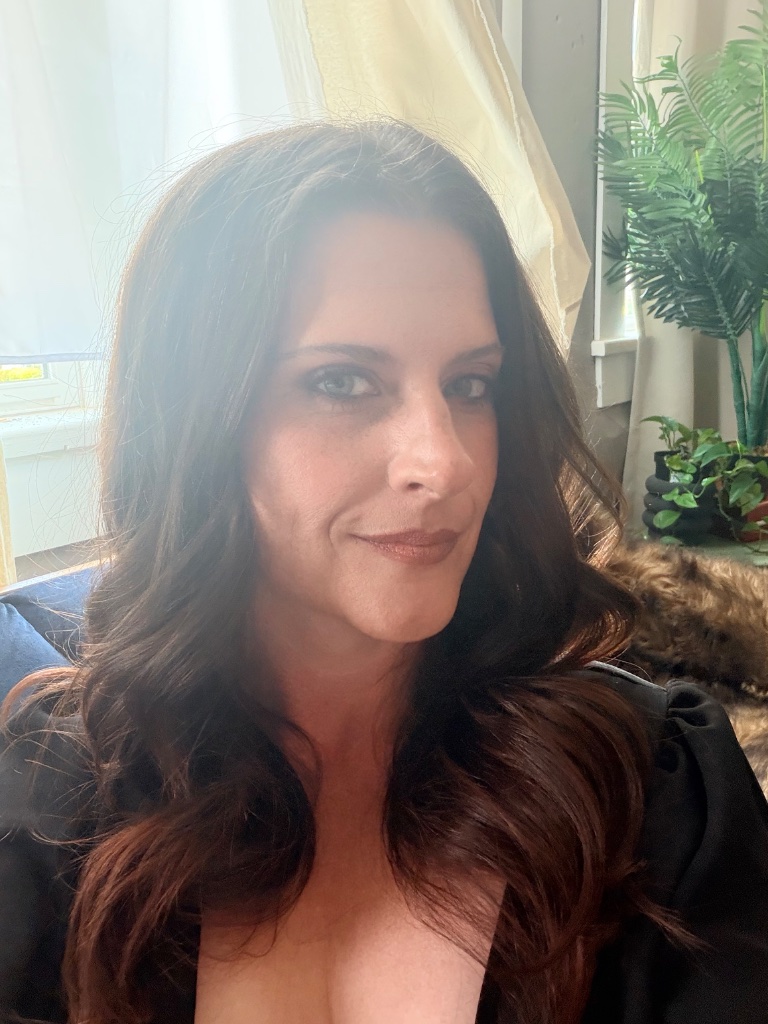
B.G. Topping
"I stayed."
Graphic designer turned novelist. A woman who took the long way to the page — and brought every mile with her.
Graphic designer turned novelist. A woman who took the long way to the page — and brought every mile with her.
I was one of 30 students selected by GPA for consideration into the Graphic Design program at Auburn University. Then one of 29 chosen through competitive portfolio review to be accepted. I earned my BFA in Graphic Design and graduated in 2008.
My senior capstone was a high-speed water droplet photography campaign — brand identity, environmental design, full-scale bus wrap mockups. I was the kid who saw the world in composition, negative space, and type. I still do.
I graduated into the worst economy in modern history. The creative jobs weren't there — or they were, and nobody wanted them. I took them anyway. I took the jobs that didn't look like the career I'd been trained for, and I did them well, and I stayed.
I built a life. Got married. Had a daughter. Started a design business in Columbus, Georgia — BGTdesignservices. I found clients who needed brands, not just logos. I grew an Instagram from zero to thousands by showing up every single day.
And somewhere in the middle of all of that — between the client work and the school drop-offs and the slow cooker dinners — I started writing. Not because I planned to be an author. Because the story wouldn't leave me alone.
People ask how a graphic designer becomes a novelist. The answer is: the same way a photographer becomes one. You learn to see.
Design taught me composition — where the eye lands, where the white space breathes, where tension lives. It taught me that every element should earn its place on the page. That restraint is a choice. That contrast is how you make people feel something.
Writing a novel uses the same muscles. Every scene is a layout. Every chapter is a spread. Every line break is negative space. The skills aren't different — the medium is.
I'm currently pursuing graduate research on AI ethics in the entertainment industry. Not because I needed a degree to validate my choices — but because I wanted to understand them.
I use AI as a creative collaborator. I'm not going to pretend otherwise. But I didn't ask it to write my book. I had my hands in every page — every scene measured against a life I actually lived, every line I approved or didn't. The AI gave me speed. It never gave me the truth. That part was always mine.
I believe there are ethical ways to use these tools and unethical ways. I believe transparency matters. And I believe the conversation about AI and creativity is just beginning — and that the people who should be leading it are the ones actually doing the work, not the ones selling the software.
What I didn't expect was for the world to start saying it back.
In a single pre-dawn session in July 2026, I found seven independent voices — authors, academics, journalists, and platforms — all saying what my thesis says. Not because I went looking for confirmation. Because the algorithm recognized what my work is about and placed me in the conversation.
None of this was orchestrated. It was earned — one 5 AM post at a time.
My thesis went from a graduate paper to a position the market is building infrastructure around. Human authorship isn't just an ethical stance — it's becoming a product distinction. And I was saying it before the court documents, before the library apps, before the hashtags.
I'm not ahead of the curve. I am the curve.
New Orleans isn't a setting I chose. It's a place that chose me — or maybe we recognized each other. The humidity, the rot, the beauty growing out of decay. The way the city holds grief and celebration in the same breath, the same street, the same hour.
My novel is set there because that's where the story lives. Not the French Quarter of tourism — the New Orleans of ancestral memory, of midnight kitchens, of women who know things they'll never say out loud.
I'm not self-publishing by default. I'm querying literary agents — the old-fashioned way. A query letter. A synopsis. The first pages. And then the waiting.
People ask why I'd choose the hard road. Because I believe this book belongs on bookstore shelves. In libraries. In the hands of a reader who walks into a store looking for something and finds it. Traditional publishing is slow, rejection-heavy, and deeply human. I'm here for all of it.
I've queried over two dozen agents since May. Three have passed. Two are reading pages right now — one who asked for five, one who asked for fifty. The manuscript is with a professional editor. Chapter One. In her hands.
This is the part nobody sees. The quiet months between "I wrote a book" and "I have an agent." The waiting. The revision. The 3 AM second-guessing. I'm in the waiting right now — and I'm telling you about it because you're here, and that means something.
Before She Knew isn't a standalone. It's the first book in a six-novel universe — a body of work I've been building quietly for over a year. Three of those books are already written.
I didn't set out to write one book. I set out to tell a story that was too big for one. Secrets, grief, identity, the things women carry — these themes don't resolve in 300 pages. They unfold across a lifetime. Across generations. Across cities.
Agents want writers they can invest in long-term. I'm not asking anyone to bet on a single manuscript. I'm asking them to bet on a universe.
I'm not trying to be extraordinary. I'm trying to be honest. I'm an ordinary person who has lived through things that are both deeply personal and universally human — secrets, grief, identity, and what we survive.
I want the women who read my work to feel known. Not helped. Not fixed. Known. That's the whole point. That's always been the whole point.
Join the journey. Get first access to chapters, updates, and the stories behind the story.
Subscribe to the Newsletter